
International conference
In 2026, the Canal du Midi will commemorate 30 years since its inscription on the UNESCO World Heritage List.
Using the Canal du Midi's 350-year history and its repeated transformations as a starting point, this anniversary provides an opportunity to broaden the discussion to canals — understood as constructions built (rather than modifications of pre-existing rivers) — from past to present, and on a global scale.
By comparing canals, their similarities and differences, in their past and future trajectories, this symposium aims to draw lessons that can help address the environmental, social, and economic challenges of tomorrow.
Artificial Waterways :
Governance, uses and environmental issues
of canals from yesterday to tomorrow
-
november 2026 24 to 26
-
3 days of conference
-
Toulouse
France
Organisation of the conference
This conference is organized over 3 days:
- November 24 and 25, 2026: Maison de la recherche, Jean-Jaurès University, Toulouse (31, France)
- November 26, 2026: Excursion and round table (place to be confirmed, from Toulouse)

Argument
The Canal du Midi was built from 1667 and put into service in 1681. This exceptional structure, was intended to link the Atlantic Ocean to the Mediterranean Sea. The objective was to promote the export, within and outside the province, of products from Haut- and Bas-Languedoc and, more broadly, to stimulate trade throughout the kingdom. Although the project dates back to at least the 16th century, Pierre Paul Riquet was the first to conceive of a comprehensive, feasible system, consisting of 240 kilometers of canal from Toulouse to the Thau lagoon and 80 kilometers of ditches supplying it with water from the Montagne noire to the Naurouze pass; the Brienne, Jonction and Robine canals were added in the 18th century. While the royal authorities played a decisive role by providing significant funds, the États of Languedoc also made a crucial financial contribution alongside Riquet’s own resources, to contribute to one of the largest construction projects of the 17th century. Its immensity can be seen in the 328 engineering works carried out, including the Saint-Ferréol dam, the Répudre canal bridge, the Malpas tunnel, the Fonseranes octuple lock and the Agde round lock, to name the most emblematic. The technological feat was paired with an aesthetic concern evident not only in the engineering constructions but also in the buildings along the canal—harbour facilities, employees’ houses, inns and warehouses. The construction of the Canal du Midi created a completely new landscape, one that shaped all the surrounding territories and towns.
From its opening, the Canal du Languedoc (the former name of the Canal du Midi) quickly became essential for both passenger transport, with the boat « barque de poste », and freight. It stimulated trade in the province and reinforced the prevailing enthusiasm for artificial waterways. All these artificial "waterways," which connected different places where water would not naturally flow, promised significant economic growth.
After the success of the Briare canal— the first summit-level canal in France, built to link the Loire and the Loing and opened in 1642— the construction of the Languedoc canal pushed the boundaries of what is possible. Following its example, the royal administration supported the construction of new canals: the Canal d’Orléans, opened in 1692 (though without reaching the technical sophistication of the “wonder of Europe”); the Canal de Givors between the Loire and the Rhône, completed in 1780; the Canal de Bourgogne, linking the Saône and the Yonne, envisioned under Henry IV (1589–1610) and completed in 1832; the Canal Crozat in Picardy, opened to navigation in 1809; and others. The Becquey Plan, adopted in 1820, increased their number during the first half of the 19th century with the goal of creating a national network of waterways, including the Rhine–Rhône Canal and the Nantes–Brest Canal. The Garonne Lateral Canal (1838–1856), connecting the Canal du Midi to Bordeaux, was built during this period to avoid the hazards of navigation on the Garonne. Thus, over this period, France gradually built an extensive canal network. The way of gathering waters and artificially conducting them by freeing oneself from the relief was gradually spreading everywhere, across Europe and the world.
As a result, the Canal du Midi —nationalised during the Revolution and later leased to the Canal du Midi Company created in 1810— underwent many improvements that benefited freight and passenger transport until its leasing to the Compagnie des chemins de fer du Midi in 1858. In 1877, the Freycinet Plan introduced the standardisation of canals and locks, enabling inland waterway transport to better withstand competition from the rapidly expanding railway network and preventing the railways from gaining a monopoly. During this time, the Canal du Midi, neglected, saw its activity decline. As it was owned by a private company, it was excluded from the major modernisation programmes applied to the state-owned network. Nationalised by the law of November 27, 1897, the canal became the subject of studies aiming to increase its performance, but the First World War prevented the planned improvements from being implemented.
Although the interwar period was unfavourable to major investment projects on waterways, the strong economic recovery of the 1950s and 1960s revived the hopes of boatmen in the Southwest network. For more than twenty years, the Canal du Midi experienced renewed activity. Driven by regional economic development, the State revisited its modernisation plan. Implementation began in 1970 with the extension of the locks on the Garonne Lateral Canal from 30 to 40 metres. Work was completed in 1974. It continued on the Canal du Midi from 1977 onward. But it was already too late: the economic crisis, the development of the motorway network and the commercial strength of the SNCF (national rail company) caused freight to abandon the canal. The State suspended the modernisation programme in 1984, leaving 140 kilometres unchanged since the 17th century. A Freycinet barge (38.50 metres long) would therefore never be able to travel from Bordeaux to Sète. In 1989, the last professional boatman on the Canal du Midi retired.
The canal’s salvation came from the rise of an emerging use that had been developing since the late 1960s: river tourism. In the 1980s, inland waterway recreation expanded significantly. With its carefully designed structures and majestic rows of plane trees, the Canal du Midi attracted increasing numbers of pleasure boaters. The heritage recognition of the canal, which had begun in the early 20th century, accelerated strongly. It culminated in the canal’s inscription on the UNESCO World Heritage List in 1996. Since then, the Canal du Midi has been the most frequented canal in France, both on the water and along its banks. Today, the canal supports a new mode of tourism—slow tourism—in line with growing concerns for environmental responsibility and sustainability. Goods transport is also being reconsidered through modal shift initiatives, and several pilot projects aim to revive freight transport on Midi canals.
Beyond navigation, the Canal du Midi plays a major role in regional water management (irrigation and drinking water supply). In the 18th century, irrigation withdrawals were rare; in the 19th century, the expansion of modern agriculture increased the need for irrigation, which the canal could provide. This trend intensified in the 20th century. In the 1970s, the creation of large irrigation networks by the Bas-Rhône-Languedoc company, supported by public authorities, was designed in connection with the East-West axis offered by the canal. The great drought of 1976 reinforced this use, which has continued to grow since then.
Between navigation and other water uses, the Canal du Midi now shares a new destiny with other waterways worldwide. To date, six other canal systems have joined it on the UNESCO World Heritage List: the Grand Canal of China; Seventeenth-Century Canal Ring Area of Amsterdam inside the Singelgracht in the Netherlands; the Pontcysyllte Aqueduct and Canal in the United Kingdom; the four lifts on the Canal du Centre and their Environs, La Louvière and Le Roeulx in Belgium; the Rideau Canal in Canada; and the water management system of Augsburg in Germany. This recognition reflects a recent awareness of canals as heritage assets to be protected and displayed globally.
The 350-year history of the Canal du Midi has inspired numerous historians, supported by well-preserved archives ordered since the 18th century and housed in a dedicated building in Toulouse since the 19th century. Alongside Michel Cotte’s 2003 comprehensive history, the canal has inspired several illustrated volumes highlighting its iconographic collections and built heritage. Many historical studies focus on the project’s genesis, its complex construction—particularly the hydraulic challenges—and the personality of Pierre-Paul Riquet, sometimes mythified. More recently, Nicolas Marqué has dedicated several works to the canal’s spatial integration within the city of Toulouse. The Canal du Midi is also included in studies of transport networks at the regional or national scale, as one navigable waterway among others, subject to tolls and competing with rail in the 19th century; geographer A. Beyer offered a synthesis of this in 2016. At the local level, J.-M. Minovez situated the canal within the “navigation system around Toulouse” to examine its imperfect connection to the Garonne, with lower-than-expected economic impacts.
While rivers have long attracted geographers—regarding hydrology, urban river landscapes or freight transportation (e.g. the Mississippi, Saint Lawrence)—canals have received less attention. Nevertheless, whether in tourism geography (e.g., Shuying, Wenting 2024) or urban studies, canals often appear in broader reflections. In research on ecological transition, studies of human and freight mobility particularly in urban environments have led to renewed interest in waterways made peripheral by rail and road development (Beyer, Debrie 2014). In geopolitics, some case studies examine inter-oceanic canals (Suez, Panama) alongside oceanography and strait studies. Regarding the Canal du Midi, Robert Marconis’s reflections in the early 1980s—at a time when its economic role was collapsing—remain relevant: What should be done with this heritage monument, then considered “regional”? A 2017 PhD by Lisa Rebolledo on landscape assessment encourages rethinking tourism development. This opens the door to a geography of sensorial experience at a time when the canal’s landscape is threatened by a fungus affecting its iconic plane trees. Research is also being conducted with local partners, for instance on urban logistics. Diverse entrepreneurial initiatives and calls for modal shifts should bring renewed attention to the economic activation of this heritage. But with what environmental limits and what conflicts of use?
Thus, many aspects remain to be studied, offering multiple research avenues for this conference.
Call for papers
A call for papers is launched for this conference. Proposals are welcome in history, geography, geo-history, economics, engineering and systems sciences; the conference is also open to interdisciplinary approaches, including art history, literature, sociology, anthropology, ethnology or law. This call for papers is addressed to all researchers—early career or established—whose work concerns one of the following themes. Managers of canals listed as UNESCO World Heritage Sites may also submit proposals.
Proposed communication themes (non-exhaustive list)
Canal and Water Management and Governance
- Canal management
- Stability of canals
- Infrastructure adaptation and development (modernisation, obsolescence)
- Governance systems
Uses and Economics of Canals (and their transitions)
- Navigation: canal boating
- Mobility and the question of temporality on canals (speed/slowness)
- Freight and passenger transport
- Waterway tourism and on the shores
- Water transport
- Valuing the potential of canals (e.g., new renewable energies)
- Canal patrimonialization (or its absence)
- Coexistence of usesla
Canals in Their Environment
- Connections with transport networks (rivers, roads, railways, ports)
- Water supply for the canals and its evolutions
- Ecosystem services provided by canals (ecologic green/blue corridors, water/natural or agricultural environments…)
- Impacts on surrounding territories: structuring/destructuring effects
- Creation of new landscapes: urban/rural
- Relationships with local residents
Canals of the Future
- Water-related issues
- Flooding of rivers and their relationship with canals (effects of floods on canals, canals’ role in flood management)
- Biodiversity management
- The role of canals in transport and future mobility
- Impacts of climate change
Presentation format
Languages of communication: English or French
Duration of communications: 25 minutes.
Proceedings publication scheduled for 2027
Submission guidelines
Proposals, in French or English, must include :
- a title
- a summary of env. 2,000 characters
- a brief biography of the presenter (position, institutional affiliation, publications, email).
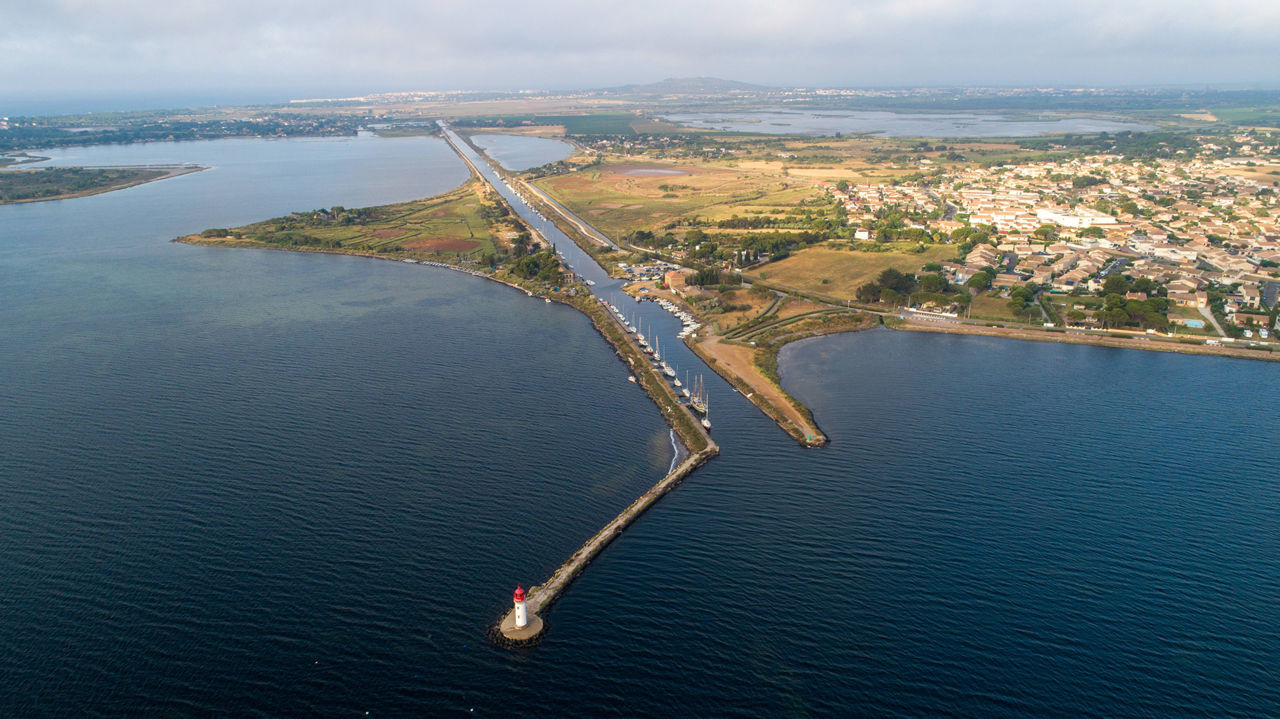
Fin du canal du Midi aux Onglous à Marseillan © VNF, Victor Tonelli
Organising and Scientific Committees
Organising Committee
- Emmanuelle Charpentier, Senior Lecturer in Early Modern History, University of Toulouse–Jean Jaurès – FRAMESPA UMR 5136
- Laurent Cyrot, Project Director for the Canal du Midi to the Prefect of the Occitanie Region
- Philippe Dugot, Professor of Geography, University of Toulouse–Jean Jaurès – LISST UMR 5193
- Nicolas Marqué, Senior Lecturer in Early Modern History, University of Toulouse–Jean Jaurès – FRAMESPA UMR 5136
- Evelyne Sanchis, Head of Contractual Policies, Heritage, and Culture Department at Voies navigables de France Sud-Ouest
- Philippe Valette, Professor of Environmental Geography, University of Toulouse–Jean Jaurès – GEODE UMR 5602
- Samuel Vannier, Head of the Heritage, Culture, and Archives Unit at Voies navigables de France Sud-Ouest
Scientific responsables
- Emmanuelle Charpentier, Senior Lecturer in Early Modern History, University of Toulouse–Jean Jaurès – FRAMESPA UMR 5136
- Philippe Dugot, Professor of Geography, University of Toulouse–Jean Jaurès – LISST UMR 5193
- Nicolas Marqué, Senior Lecturer in Early Modern History, University of Toulouse–Jean Jaurès – FRAMESPA UMR 5136
- Philippe Valette, Professor of Environmental Geography, University of Toulouse–Jean Jaurès – GEODE UMR 5602
Scientific Committee
- Philippe Béringuier, senior lecturer in geography, Toulouse-Jean Jaurès-GEODE University UMR 5602
- Philippe Behra, professor of chemistry, INP-ENSIACET, Laboratory of agro-industrial chemistry
- Emmanuelle Charpentier, lecturer in modern history, Toulouse-Jean Jaurès-FRAMESPA University UMR 5136
- Anne Conchon, professor of modern history, university Paris 1 Panthéon Sorbonne-IDHES UMR 8533
- Michel Cotte, honorary professor of technical history at the University of Nantes, advisor to ICOMOS international
- David Dorchies, hydroinformatics engineer, INRAE-UMR G-EAU
- Philippe Dugot, professor of geography, university Toulouse-Jean Jaurès-LISST UMR 5193
- Stéphane Durand, professor of modern history, university of Avignon, CNE UMR 8562
- Sophie Fradier, lecturer in the history of modern art, University Toulouse-Jean Jaurès-FRAMESPA UMR 5136
- Maria Gravari-Barbas, professor of physical, human, economic and regional geography, university Paris 1 Panthéon-Sorbonne-EIREST UR7337
- François Gontard, Director of Planning and Heritage, BRL
- Steve Hagimont, lecturer in contemporary history, IEP Toulouse-LaSSP
- Bernard Le Sueur, distinguished teacher-trainer in contemporary history, university of Cergy-Pontoise
- Nicolas Marqué, senior lecturer in modern history, University Toulouse-Jean Jaurès-FRAMESPA UMR 5136
- Raphaël Morera, research director CNRS-CRH UMR 8558
- Jean-Michel Minovez, professor of modern history, university Toulouse-Jean Jaurès- GEODE UMR 5602
- Bruno Revelli, lecturer in geography, Toulouse-Jean Jaurès University - LISST UMR 5193
- Sylvie Sagnes, CNRS-Héritages UMR 9022 researcher
- Philippe Valette, Professor of environmental geography, University of Toulouse-Jean Jaurès-GEODE UMR 5602
- Jean-Pierre Wolff, emeritus professor of geography, university Toulouse-Jean Jaurès-LISST UMR 5193
Partners of the conference
Supported by the CHEDD, ministerial history committee of the ministerial pole of Spatial Planning and Ecological Transition.