TOULOUSE
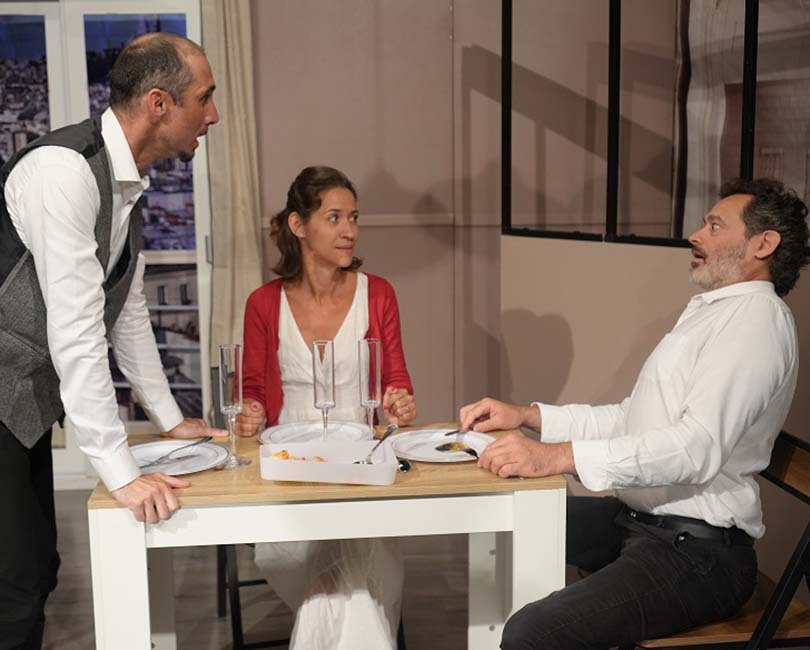
Nathalie and Yves are busy organising a reunion dinner with Pierre, Yves’s best friend. It’s been a good ten years since the two men last saw each other. During the evening, many questions will arise and sometimes yield surprising answers:
Should you introduce your best friend to the woman you love? Should you have dinner with Bernard and Nicole every Thursday evening? Do poor people stay in love longer than rich people? Can you choose your successor when you leave your wife? Is a writer necessarily funnier than an insurance broker? Should you break up before or after dessert?
The scene is set, the tone of humour can be sensed between the lines, the comedy takes shape and the love triangle weaves its way into the narrative. As for the answers to these famous questions, they are revealed at the heart of a subtly constructed story, moving from one surprise to the next.
The plot weaves its threads before unravelling a series of twists and turns over the course of nearly an hour and a half. The dialogue is lively, biting and laced with that touch of jubilant derision. Fast-paced and with no lulls, the play’s reunion says far more than meets the eye. What unfolds is a delightful comedy in which love, relationships, routine, friendship and ego clash, prompting deep reflection.