TOULOUSE
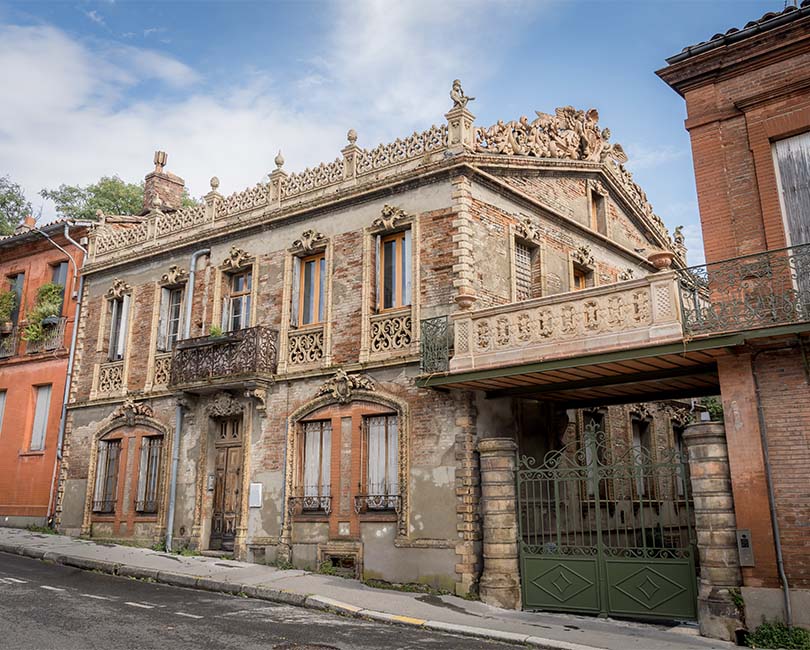
Palmettes, mascarons, caryatids, friezes… Have you ever noticed the variety of terracotta decorations that adorn Toulouse’s buildings? Although they are now emblematic features of the city, they were first produced in the 19th century, using a revolutionary manufacturing process.
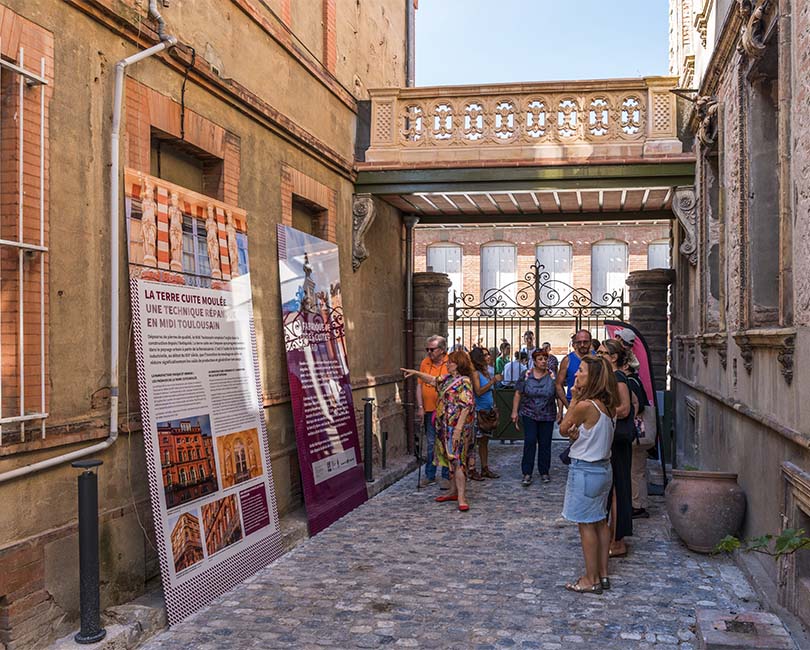
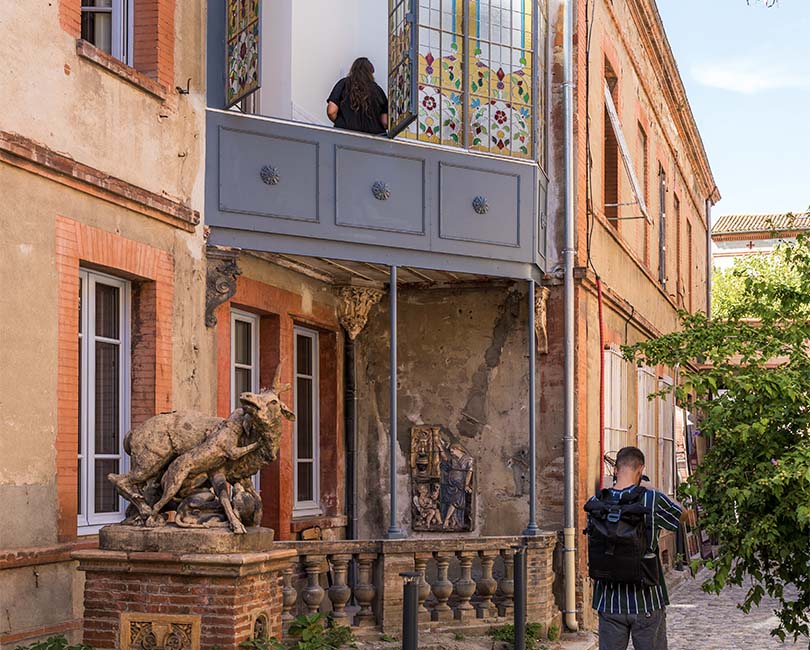
This new tour will take you to the Maison Giscard, a former manufacturer of moulded terracotta ornaments and a veritable catalogue house.
The scarcity of white stone, a noble and expensive material, led to the search for alternative solutions to provide bourgeois buildings with elegant ornamentation. The Virebent family played a part in the development of this modern style. The father, Jacques-Pascal, was the city’s chief architect. His son, Auguste, was the creator of a revolutionary process for industrialising the ornaments that would be fixed to façades. Various shapes were cut out of the clay using cookie cutters. Auguste patented the process in 1831. It became known as plinthotomy. From then on, the Virebent factory in Launaguet never stopped creating new decorative moulds that the public could choose from a catalogue: it was a real success, because in 1845, one hundred thousand pieces of terracotta came out of the kilns! The family tradition continued until Anne Virebent married Henri Giscard, a talented craftsman who added his own touch to the process. This tour takes you from the rue de la Pomme to the Marengo district. As you walk up the Allées Jean Jaurès, you’ll find decorations worthy of Versailles or the Renaissance… Finally, the Maison Giscard, which has been closed since 2005, is opening its courtyard gates to you for the last time on this tour. After all that, I promise you’ll be so obsessed with plinthotomy that you’ll want to say the word at your next dinner party!
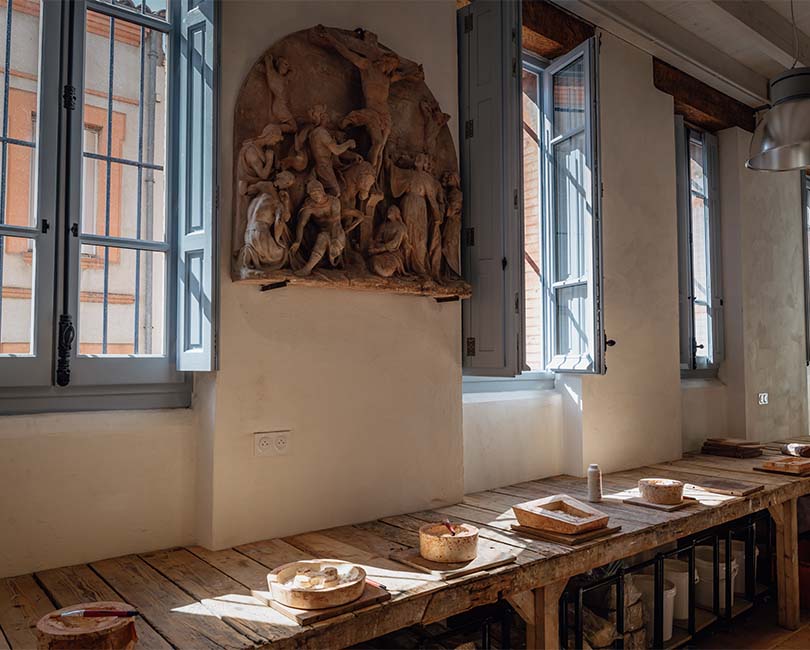
Only Joseph Giscard’s former office and the shaping workshop are accessible. The production workshop, awaiting restoration, is not open to the public.
Guided tour in partnership with Espace Patrimoine.